
News
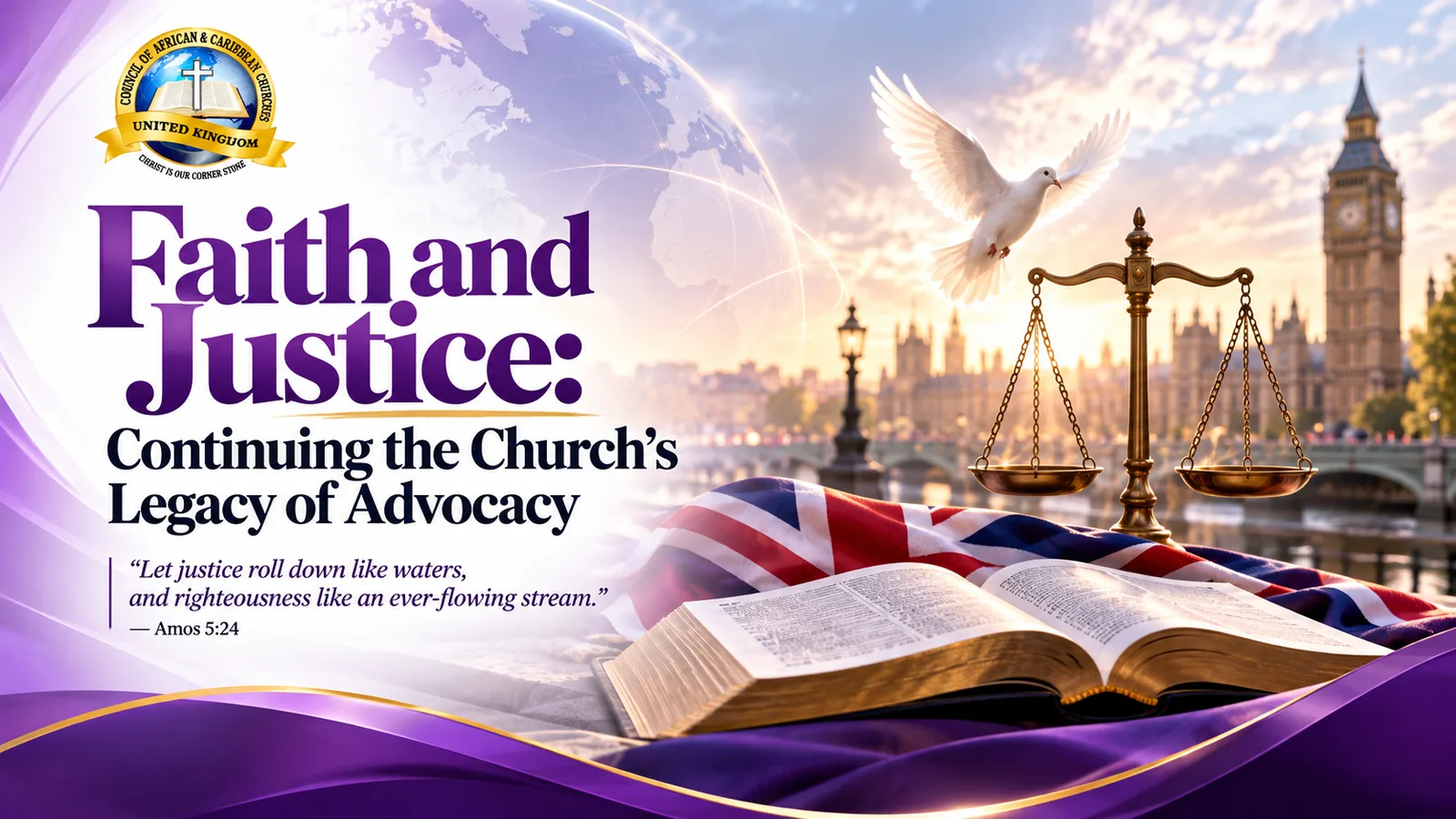
Faith and Justice: Continuing the Church's Legacy of Advocacy
Christian faith has never been only about what happens inside a church building.
Let justice roll down like waters, and righteousness like an ever-flowing stream. — Amos 5:24
Reflection 01
Faith that crosses the church threshold
Christian faith has never been only about what happens inside a church building. Scripture repeatedly connects worship with the treatment of people, particularly those who are vulnerable, marginalised or overlooked. The prophets challenged societies that practised religious rituals while neglecting justice. Jesus consistently demonstrated compassion toward people who were excluded. The early Church developed communities of generosity and mutual care. For Christians today, faith and justice therefore belong in the same conversation.
Reflection 02
Human dignity as sacred ground
Justice begins with the recognition of human dignity. Every person bears the image of God, and that conviction has practical implications. It affects how Christians treat migrants, refugees, children, elderly people, people experiencing poverty, people with disabilities and communities facing discrimination. It also affects how churches respond when people are excluded from opportunities or treated without dignity. Advocacy begins when the Church refuses to become indifferent to the suffering of others.
Reflection 03
A diaspora calling shaped by experience
For diaspora churches, questions of justice can carry particular significance because many congregations have personal experience of migration and cultural transition. The story of moving from one country to another can involve sacrifice, opportunity, discrimination, uncertainty and hope. Churches therefore have an important pastoral role in helping migrants navigate unfamiliar systems while also contributing constructively to wider conversations about community wellbeing. The CACC UK identifies social justice, human dignity, immigration justice and community welfare among its areas of advocacy.
Reflection 04
Principle without party allegiance
Christian advocacy, however, should not be confused with partisan politics. Churches can speak about principles such as dignity, compassion, fairness, family stability, protection of vulnerable people and responsible government without turning every ministry platform into a political campaign. The Church's responsibility is to form consciences through Scripture, prayer, wisdom and moral reflection. Christians may ultimately reach different conclusions about particular political questions while still sharing a commitment to human dignity and justice.
Reflection 05
Listening before speaking
Effective advocacy also requires listening. Churches sometimes speak about communities without listening carefully to the people who actually live within those communities. Good advocacy begins with questions: What is happening? Who is affected? What do they need? What evidence exists? What responses are already working? Where are the gaps? Listening protects the Church from making assumptions and allows advocacy to become more practical and credible.
Reflection 06
Justice begins within our own walls
The Church can also practise justice through its own institutions. It is difficult to advocate for transparency, fairness and dignity in society while ignoring those principles internally. Churches should examine their own employment practices, leadership structures, safeguarding procedures, treatment of volunteers, financial systems and pastoral care. Justice begins close to home. A church's public voice carries greater integrity when its internal life reflects the principles it teaches.
Reflection 07
The patient work of lasting advocacy
Advocacy also requires persistence. Social problems rarely disappear because of one sermon, one campaign or one public statement. Churches may need to develop relationships with community organisations, local authorities, charities, schools and other faith communities. They may need to gather evidence, educate their congregations, support families, write letters, participate in consultations or create practical programmes. Advocacy becomes powerful when words are connected to sustained action.
Reflection 08
A living witness for another generation
The deeper Christian lesson is that justice is not an optional extra for particularly passionate believers. It is part of discipleship. Micah's call to "do justice, love mercy, and walk humbly with your God" captures a balance the Church still needs. Justice without humility can become self-righteousness. Compassion without action can become sentiment. Action without prayer can become activism without spiritual depth. The Church's calling is to bring these dimensions together: worship God, love people, defend dignity, serve communities and speak truth with humility. That is how a legacy of Christian advocacy becomes more than history; it becomes a living witness for another generation.